

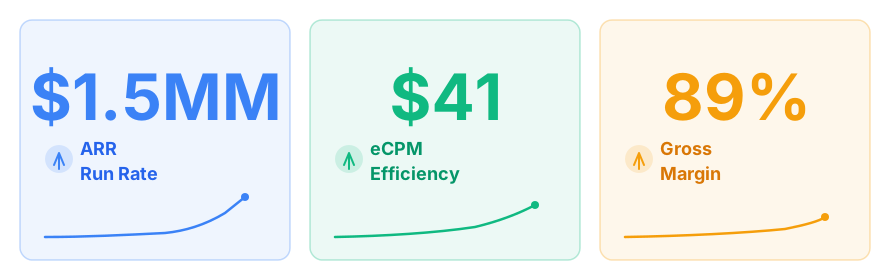
Built an automated publisher acquisition engine for an ad-tech CPL platform, reaching $1.5MM ARR run rate in 6 months on 89% gross margin.
B2B PaaS ad-tech platform selling CPL advertising to long-tail website publishers. Enterprise-lite deals ($25K-$100K ACV). The company just lost its largest advertiser partner due to lack of publisher demand and had less than a quarter of runway. The company needed to scale long-tail publisher acquisition but faced significant challenges.
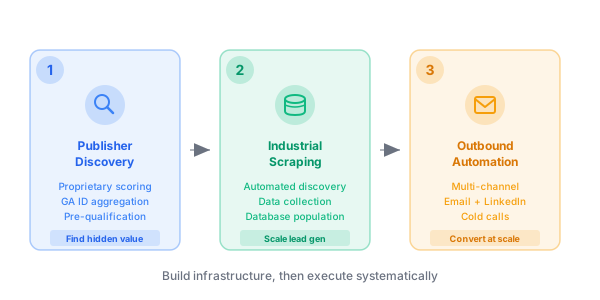
The approach: build technical infrastructure first, then scale execution. I developed a proprietary publisher discovery algorithm that identified publishers that were a good fit for each of our advertising verticals, and could be spun up to provide demand immediately. An industrial-scale web scraper -- prototyped in-house, and then built out by the founders of the Scrapy framework -- would populate the database. Finally, a custom-built automated outreach engine would rapidly convert MQLs at scale.
Proprietary scoring system to identify and pre-qualify publishers. Key innovation: automatically qualify publishers based on various attributes such as keyword ranking, available ad inventory, estimated traffic, existence of multiple websites owned by the same organization using GA IDs, name servers, and IP addresses, etc.
Automated web scraper to find publishers across the internet at scale and populate database with pre-qualified leads. We downloaded hundreds of millions of URLs from Internet Zone Files and ran scraping jobs for keyword-matched websites. We also regularly scraped Google SERPS for the top 100 websites for relevant keywords to find websites that didn't have relevant keywords in their URL. We also used the Publisher Discovery Algorithm to identify possibly related websites. The result was a MySQL database with close to a billion records we could use to long-tail needles in a very large haystack.
Multi-channel sequences (email, LinkedIn, cold calls) with personalized messaging and systematic follow-up. I also developed a tool that took screenshots of pulblishers' websites, automatically inserted our Form Ads into existing ad inventory, and saved the file as a PDF I could share for the publishers to visualize the Form Ad integration on their website. This innovation reduced friction with publishers who were concerned about aesthetics, and eliminated a step in the sales process that resulted in better velocity. The end result was a significant increase in high-quality discussions with qualified leads that led to a sustainable spike in sales.
The key innovation was the publisher scoring algorithm and the automated multi-channel outbound engine. Sites that looked low-value individually became high-value when aggregated — for example, the algorithm could identify multiple websites owned by the same organization using GA IDs, tracking IDs, name servers, and IP addresses. And publishers that used to be difficult to contact were now more easily engaged.
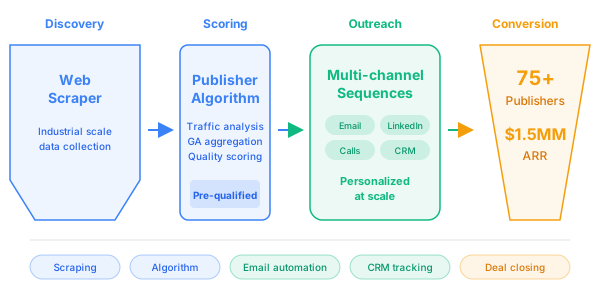
Content vertical analysis, estimated traffic evaluation, ad inventory specs assessment. Custom signals: GA IDs, tracking IDs, name servers, IP addresses for multi-site aggregation.
Industrial-strength discovery at scale. Automated data collection and publisher database population.
Personalized multi-touch campaigns with multi-channel coordination (email + LinkedIn + calls). Response tracking and systematic follow-up.
Systematic lead management, conversion tracking, and performance analytics to optimize the funnel.
Achieved in 6 months with 75+ publishers signed to the platform. Additionally, we were able to rapidly take advantage of a brand new vertical when the group buying craze took off. The Publisher Scoring Algo and Web Scraper Infra allowed me to rapidly scale publisher demand when advertisers had practically unlimited budget to throw at customer acquisition.
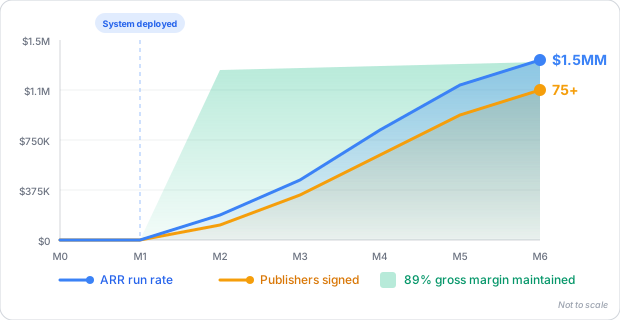
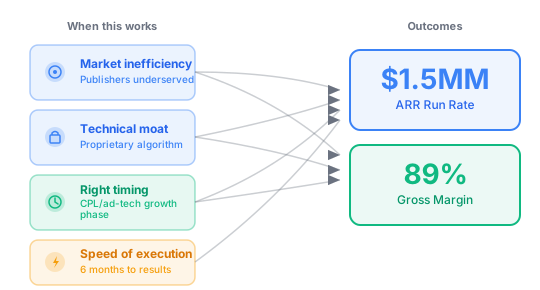
The key insight: publishers were underserved and hard to find, creating a market inefficiency. A technical moat (proprietary algorithm) combined with right timing (CPL/ad-tech growth phase) and fast execution made this work.
If you're looking to scale outbound acquisition with technical infrastructure, let's talk.
Get in touch